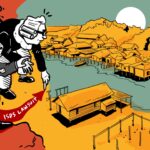
The ten ASEAN countries and Australia and New Zealand have agreed to review investor rights to sue governments known as Investor State Dispute Settlement (ISDS) in the updated AANZFTA agreement in the second half of 2026. Consensus of all governments is needed to remove or change ISDS in AANZFTA.
ISDS is a set of rules in some trade and investment agreements that allows foreign (but not local) investors to claim billions of dollars from governments in compensation for law or policy changes, or even planning and judicial decisions, if they can convince an international tribunal that these will reduce their expected future profits, even if the change is for health, environmental or other public interest reasons. Threats of ISDS are being used to discourage democratically-decided policies and to challenge environmental assessments or court decisions. Fears of long, expensive and unpredictable cases can also have a chilling effect on central and local governments. There is a growing global list of ISDS cases from fossil fuel companies against government decisions to reduce carbon emissions. A recent United Nations Report concluded that ISDS is a “major obstacle” to government action on climate change.
Australian billionaire Clive Palmer has registered his mining company, Zeph Investments, in Singapore and claimed to be a Singaporean investor. He then used foreign investor rights (ISDS) in AANZFTA to sue the Australian government for a total of around $420bn in four separate cases before an international investment tribunal, three relating to coal mining and energy licenses. Palmer’s first claim was for $300bn after he lost a High Court appeal against a Western Australian government decision to refuse an iron ore mining license. The last three claims for a total of $120bn are because a Queensland Court refused his coal mining license and a license for a coal-fired power plant for environmental reasons, including increased carbon emissions. These cases are ongoing in 2026.
The November 2025 United Nations Framework Convention on Climate Change report Baku to Belém Roadmap to 1.3T on climate financing explicitly called out ISDS in trade agreements as a systemic barrier to financing climate action in developing countries (p.52):
A further systemic barrier reflects outdated clauses used in over 2,000 investment treaties that can impact the sovereign policy-making space of developing countries. Investment treaties with investor-state dispute settlements provisions allow foreign investors to claim compensation against government measures that may challenge their business interests. Potential damages liability can affect policy decisions to set enabling environments for climate action. Up to USD 83 billion has been awarded through 349 investor-state disputes for policy actions such as denial of permits for GHG emissions-intensive exploration, extraction, or infrastructure. Developing countries are vulnerable to over 60 per cent of potential Investor-state dispute settlement (ISDS) claims due to climate action.
Irene Vélez Torres, the environment minister of Colombia, spoke at the UN Climate Change conference in November 2025, saying “No government should have to choose between
protecting nature and its people, and protecting itself from arbitrators.” Colombia has since announced its withdrawal from ISDS arrangements. ISDS is now outdated and many governments are rejecting it. There is no compelling evidence that agreements with ISDS result in increased Foreign Direct Investment. There are increasing numbers of huge claims against developing countries. In 2019, an ISDS tribunal ordered Pakistan to pay $ US 5.8 billion to a mining company, which was almost equivalent to an emergency loan from the International Monetary Fund to address Pakistan’s economic crisis. India, Indonesia, South Africa and Ecuador have cancelled old investment agreements with ISDS. Brazil has never agreed to ISDS. Capital exporting countries are now also resisting ISDS. Australia and New Zealand have policies against ISDS. The European Union and the United Kingdom have withdrawn from the Energy Charter Treaty because its ISDS provisions were being used by fossil fuel companies against government policies to address climate change.
ASEAN countries also face specific threats related to the climate crisis and development policies because they are rich in critical minerals needed for the transition to renewable energy, which has increased global demand. Some ASEAN countries have intensified their efforts to process these minerals to add value, rather than export raw materials. For example, Indonesia’s restrictions on raw materials exports have been part of a broader development strategy for value-added exports which was challenged in the past through an ISDS case brought by Newmont mining under the Netherlands-Indonesia Bilateral Investment Treaty before Indonesia terminated that treaty. The rush to mine critical minerals could see ISDS threats against national development policies from mining companies based in Australia, New Zealand or Singapore or other ASEAN countries using ISDS in the AANZFTA. Australia and New Zealand have a legally binding side-letter in AANZFTA which they agree not to apply ISDS provisions to each other. Other countries have applied selective modifications to the application of ISDS provisions.
Thus, we urge the ASEAN-Australia-New Zealand governments to:
- Support the removal of ISDS provisions from AANZFTA.
- If consensus is not reached to remove ISDS, governments should seek legally binding bilateral side letters with other governments not to apply ISDS to each other.
List of endorsing organizations:
National organisations from ASEAN countries, Australia, and Aotearoa/New Zealand
| 1. | Ngā Toki Whakarururanga | Aotearoa/New Zealand |
| 2. | Greenpeace Aotearoa | Aotearoa/New Zealand |
| 3. | Coromandel Watchdog of Hauraki | Aotearoa/New Zealand |
| 4. | Campaign Against Foreign Control of Aotearoa | Aotearoa/New Zealand |
| 5. | The Environment Council of Central Queensland | Australia |
| 6. | Australian Fair Trade and Investment Network | Australia |
| 7. | Green Music Australia | Australia |
| 8. | Friends of the Earth Australia | Australia |
| 9. | AidWatch | Australia |
| 10. | Oxfam Australia | Australia |
| 11. | Philippines Australia Union Link | Australia |
| 12. | Pax Christi Australia | Australia |
| 13. | Missionaries of the Sacred Heart Justice and Peace Centre | Australia |
| 14. | Philippines Australia Union Link | Australia |
| 15. | Public Health Association Australia | Australia |
| 16. | Union Aid Abroad – APHEDA | Australia |
| 17. | New South Wales Teachers Federation | Australia |
| 18. | Climate Action Network Australia | Australia |
| 19. | GeneEthics Ltd | Australia |
| 20. | Peoples Climate Assembly | Australia |
| 21. | Darling Downs Environment Council | Australia |
| 22. | Lighter Footprints | Australia |
| 23. | ACHRP | Australia |
| 24. | Australian Education Union Federal Office | Australia |
| 25. | Nillumbik Climate Action Team | Australia |
| 26. | Australian Council of Trade Unions | Australia |
| 27. | Uniting Church in Australia, Synod of Victoria and Tasmania | Australia |
| 28. | Yarra Climate Action Now (YCAN) | Australia |
| 29. | Australian Manufacturing Workers’ Union | Australia |
| 30. | Reconciliation for Western Sydney | Australia |
| 31. | Sutherland Shire Environment Centre | Australia |
| 32. | Migrante Australia of NSW | Australia |
| 33. | Combined Retired Union Members Association (CRUMA) | Australia |
| 34. | Climate Action Burwood-Canada Bay | Australia |
| 35. | Sydney Peace & Justice Coalition | Australia |
| 36. | Climate Justice Union | Australia |
| 37. | ActionAid Australia | Australia |
| 38. | International Grail Justice and Trade Network | Australia |
| 39. | Social Action for Community and Development (SACD) | Cambodia |
| 40. | Publish What You Pay (PWYP) Indonesia | Indonesia |
| 41. | Indonesia for Global Justice (IGJ) | Indonesia |
| 42. | Sahita Institute (HINTS) | Indonesia |
| 43. | LCITI | Indonesia |
| 44. | KRuHA | Indonesia |
| 45. | Puanifesto | Indonesia |
| 46. | International NGO Forum on Indonesian Development (INFID) | Indonesia |
| 47. | World Food Forum Indonesia Chapter | Indonesia |
| 48. | Ekomarin | Indonesia |
| 49. | FSP FARKES REFORMASI | Indonesia |
| 50. | Federasi Perjuangan Buruh Indonesia | Indonesia |
| 51. | POKJA 30 KALTIM | Indonesia |
| 52. | Center for Knowledge Indonesia | Indonesia |
| 53. | LePMIL | Indonesia |
| 54. | SRI Institute | Indonesia |
| 55. | Treat Every Environment Special Sdn Bhd | Malaysia |
| 56. | Gabungan Darurat Iklim Malaysia Berhad | Malaysia |
| 57. | Independent Advocacy for Accessibility Affordable Medicines Malaysia | Malaysia |
| 58. | Gabungan Darurat Iklim Malaysia Berhad | Malaysia |
| 59. | Consumers’ Association of Penang | Malaysia |
| 60. | Sahabat Alam Malaysia (Friends of the Earth) | Malaysia |
| 61. | Forum Kedaulatan Makanan Malaysia (FKMM) | Malaysia |
| 62. | Monitoring Sustainability of Globalisation | Malaysia |
| 63. | Sustainable Development Network Malaysia (SUSDEN Malaysia) | Malaysia |
| 64. | RURAL MALAYSIA – Persatuan Pengguna Luar Bandar & Ekologi Malaysia | Malaysia |
| 65. | Jaringan Ekologi Dan Iklim | Malaysia |
| 66. | Environmental Protection Society of Malaysia | Malaysia |
| 67. | Trade Justice Pilipinas | Philippines |
| 68. | Sentro ng mga Nagkakaisa at Progresibong Manggagawa (SENTRO) | Philippines |
| 69. | Alyansa Tigil Mina (ATM) | Philippines |
| 70. | Kilusan para sa Repormang Agraryo at Katarungang Panlipunan (KATARUNGAN) | Philippines |
| 71. | Legal Rights and Natural Resources Center-Friends of the Earth Philippines | Philippines |
| 72. | Thai Network of People Living with HIV/AIDS | Thailand |
| 73. | FTA Watch | Thailand |
| 74. | NatureWize Vietnam | Vietnam |
International and regional organisations with members in ASEAN, Australia, and Aotearoa/New Zealand
| 1. | Asia Pacific Forum on Women, Law and Development (APWLD) |
| 2. | Climate Action Network Southeast Asia |
| 3. | Focus on the Global South |
| 4. | GRAIN |
| 5. | Pacific Youth Platform |
| 6. | The Climate Reality Project Australia & Pacific |
| 7. | Third World Network |
| 8. | Transnational Institute (TNI) |
| 9. | Health Action International Asia Pacific |
| 10. | Public Services International Asia Pacific |